PUBLIC ART
A selection of Driller Jet Armstrong’s major public artworks across Adelaide, spanning murals, billboard interventions, collaborative daubist projects, and site-specific commissions that merge narrative, humour, protest, and the evolving history of the city. Armstrong’s public works are layered with story, community, collaboration, and a distinctly Adelaide sensibility — part urban archaeology, part cheeky intervention, part Daubist myth-making.
TEMPLE 2000 – Hindley Street, Adelaide
Commission: Private
Location: Former Hot Rocks building, Hindley Street
Medium: Exterior mural + custom leadlight windows
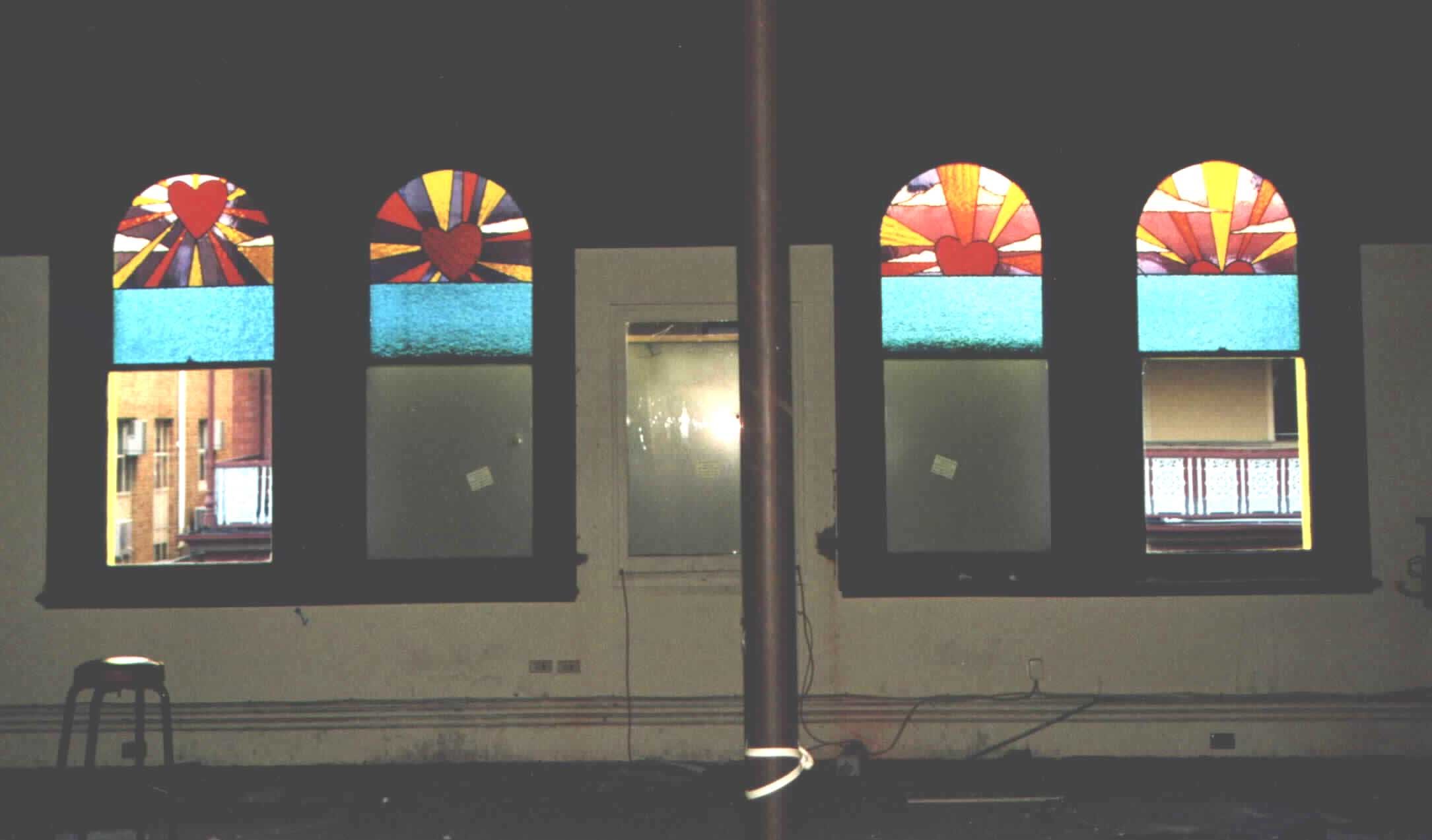
Temple 2000 transformed a rowdy Hindley Street façade into a vivid visual meditation on colour, nightlife and transition. Armstrong also designed a full set of leadlight windows depicting a stylised setting sun in the shape of a love heart, moving symbolically from east to west — a quiet gesture about passage, time, and the pulsing rhythm of the city at night.

KW STREET MURAL – Adelaide City Council Commission
Commission: Adelaide City Council
Location: KW Street (City)
Medium: Large-scale outdoor mural
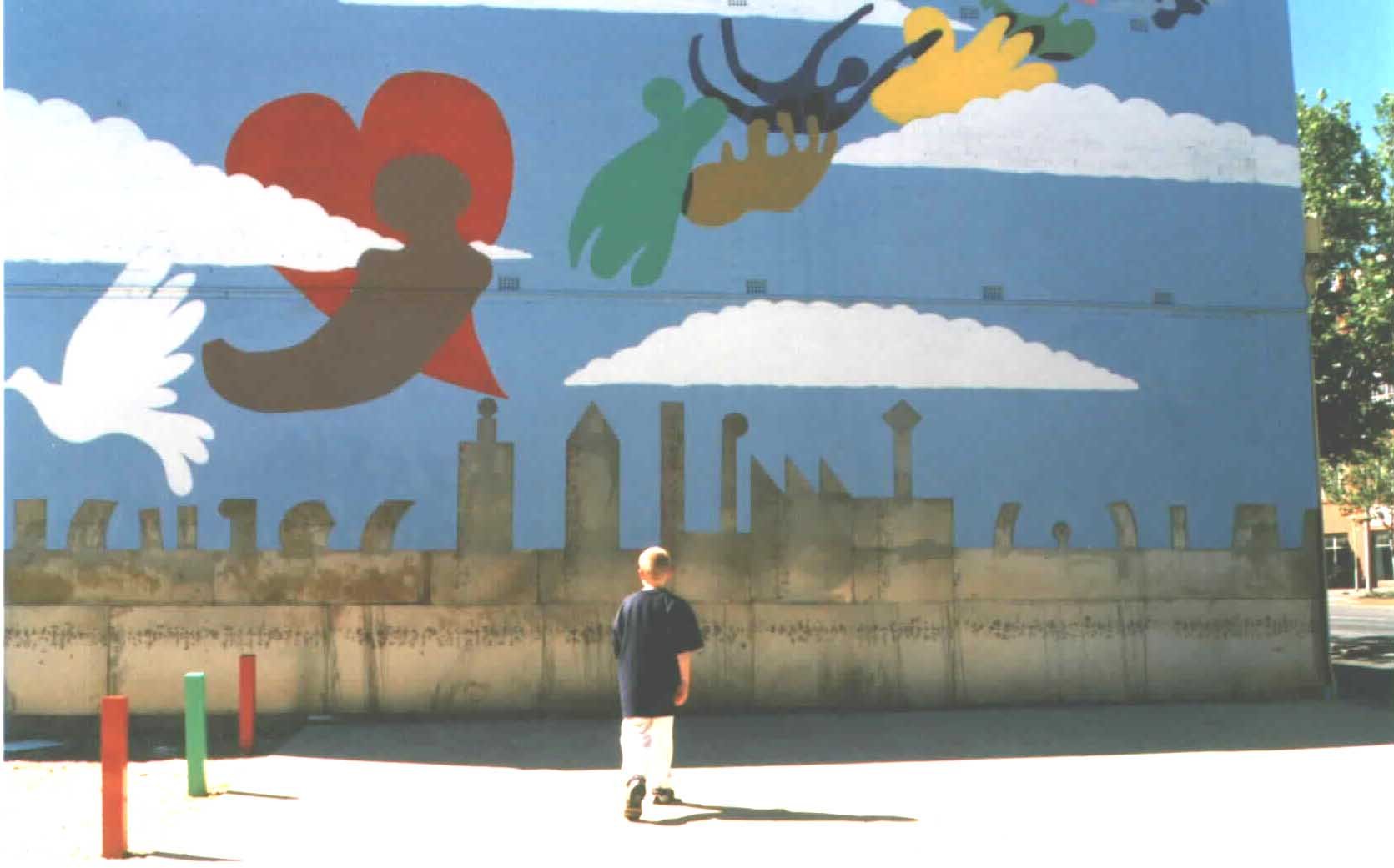
A major civic commission, this mural re-animated the site with Armstrong’s characteristic wit and colour. It forms part of Adelaide’s long lineage of street-front civic artworks, merging illustration, humour and a heightened sense of movement in the urban environment. The mural took the shapes of the sculptures running down the middle of the street which were already there and implied that the sculptures dropped from the sky through the mural.
Is There Life After Fringe? (1988)
Commission: East End Traders
Location: Rundle Street, Adelaide
Medium: Exterior mural
Timeline: Completed in six days with volunteers from the Adelaide Fringe; later covered behind the Nova Cinema wall.
Painted to celebrate the opening of the Adelaide Fringe Festival, the work captured the eccentricity and optimism of Adelaide’s cultural scene in the late 80s. Though later hidden behind new development, the mural attained cult status — surviving as an image reproduced on cigarette vending machines in The Austral Hotel, preserving it in local memory.

Billboard Project – Temporary Public Mural (1994)
Commission: Billboard Project
Medium: Painted billboard installation
Location: Adjacent to tramline
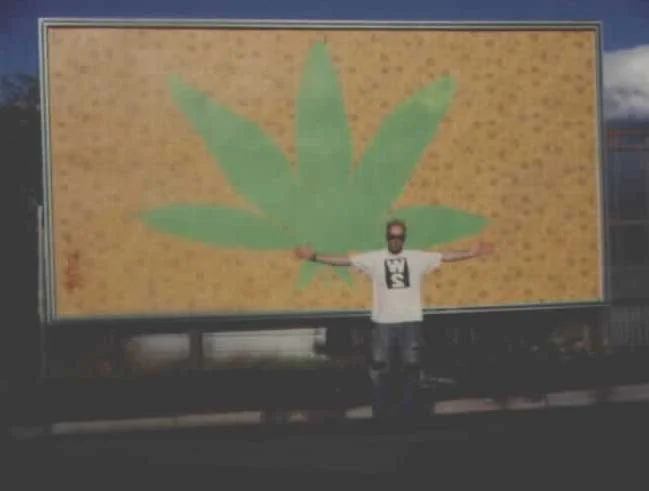
A playful conceptual intervention: Armstrong painted a full billboard green, then covered it with brown floral wallpaper, finally cutting a cannabis leaf silhouette through the paper to reveal the green beneath. A witty inversion of advertising spectacle — an early Armstrong experiment in public visual disruption.
Daubist Mural #1 (1998)
Commission: Adelaide City Council + East End Traders
Original mural: Carol Ruff & Barbary O’Brien (1984)
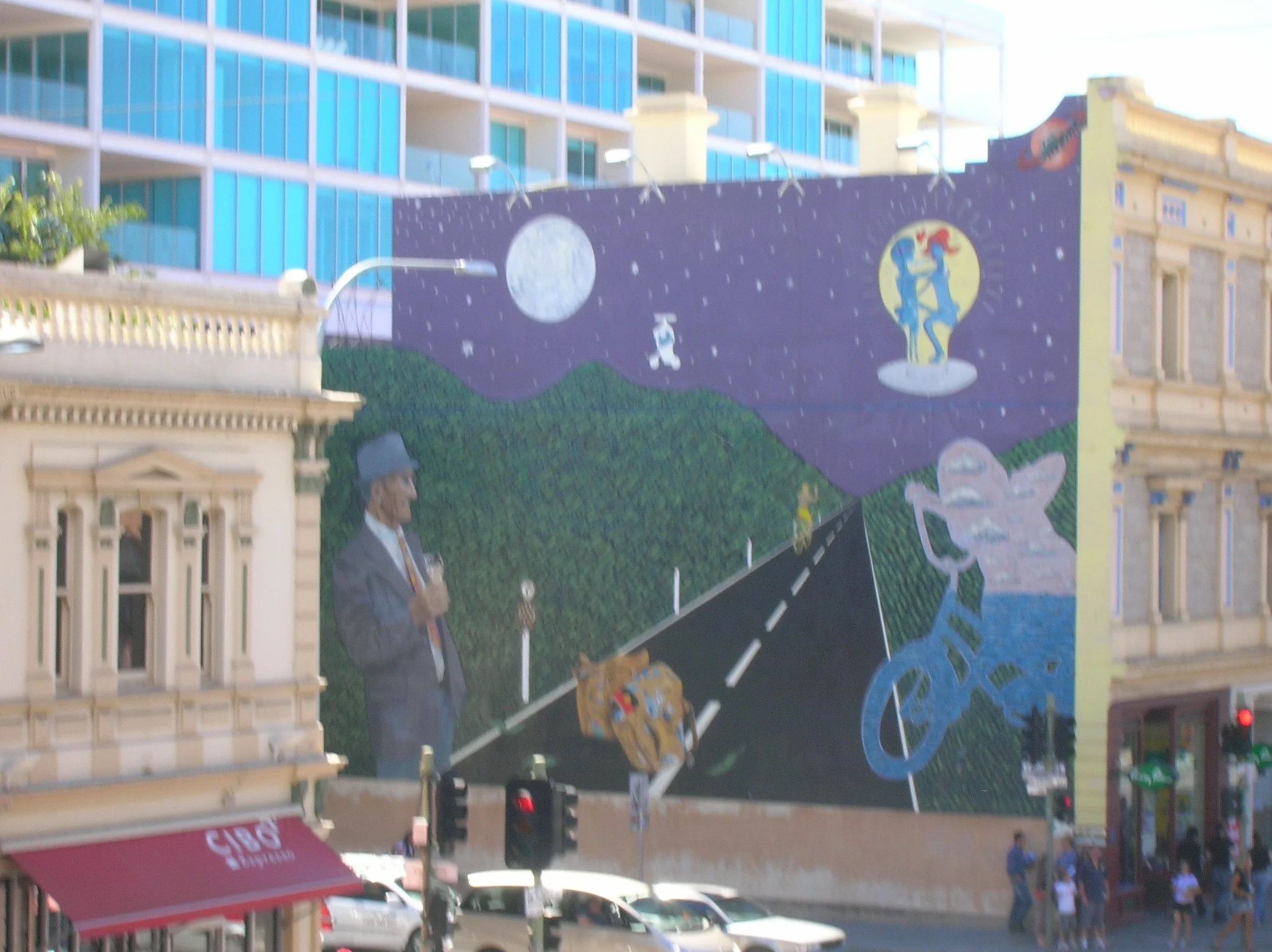
One of the most important public works in Armstrong’s career, and arguably the world’s first fully realised Daubist mural. The commission required preserving elements of the original 1984 mural while radically reimagining it — a perfect condition for Daubism’s core methodology: intervention, narrative rewriting, and layered authorship.
The Original Mural (1984)
Intended to symbolise generational connection, the original work eventually felt outdated — even eerie. Armstrong was commissioned to “keep some, transform the rest.”
The Transformation (1998)
Over several stages — “That Was Then, This Is Now,” going… going… gone — Armstrong built a sprawling, cinematic landscape: the road out of (and back to) Adelaide, memory, return, departure, and whimsical science-fiction romance.
He invited multiple artists to “daub” into the work, creating a collaborative mural that functioned as a living narrative:
Contributing Artists & Their Daubs
David Bromley
– Seascape memory zone
– “Boy on pushbike” (via stencil)Barbary O’Brien
– Updated the old man’s tie, wrinkles, melting ice creamChris Gaston
– Saturn with train looping its ringsAndy P
– Night-version of My Gyrocoptic SelfBrettski
– Lynch-inspired owl perched on a road postAndrew Parrish
- metal Mt Lofty Television Towers
Additional Features
Armstrong’s hand-painted umbrellas outside The Austral
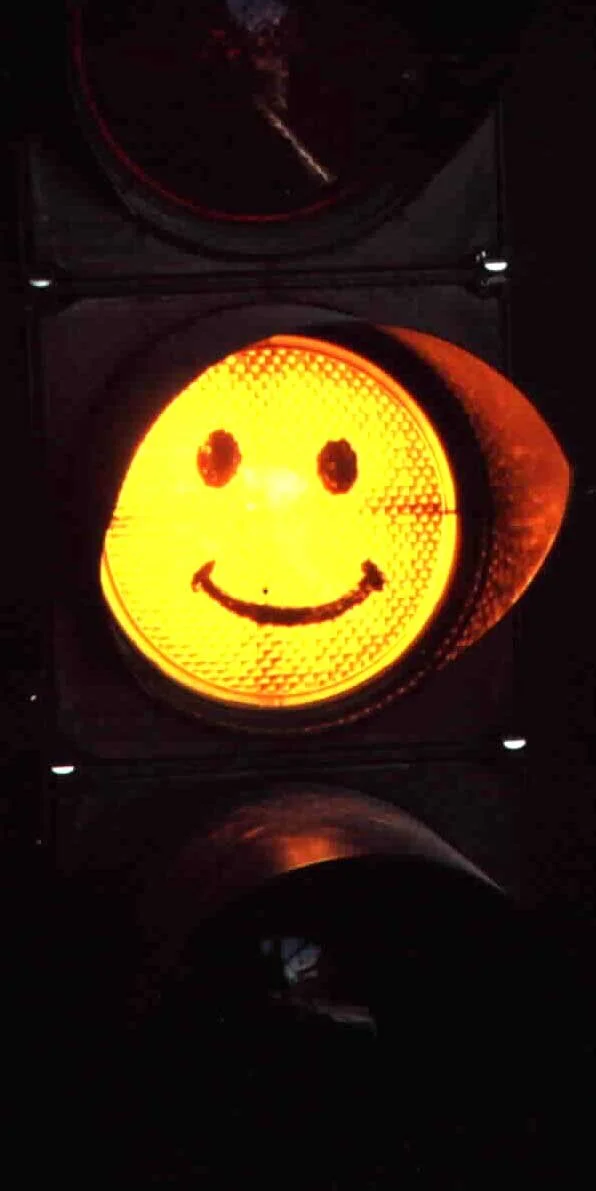
A cheeky intervention in the nearby traffic light
Custom metal towers made by Andrew Parish of Alchemy Metalworks
A rooftop celebration with the grown-up “little girl” from the original mural
👉
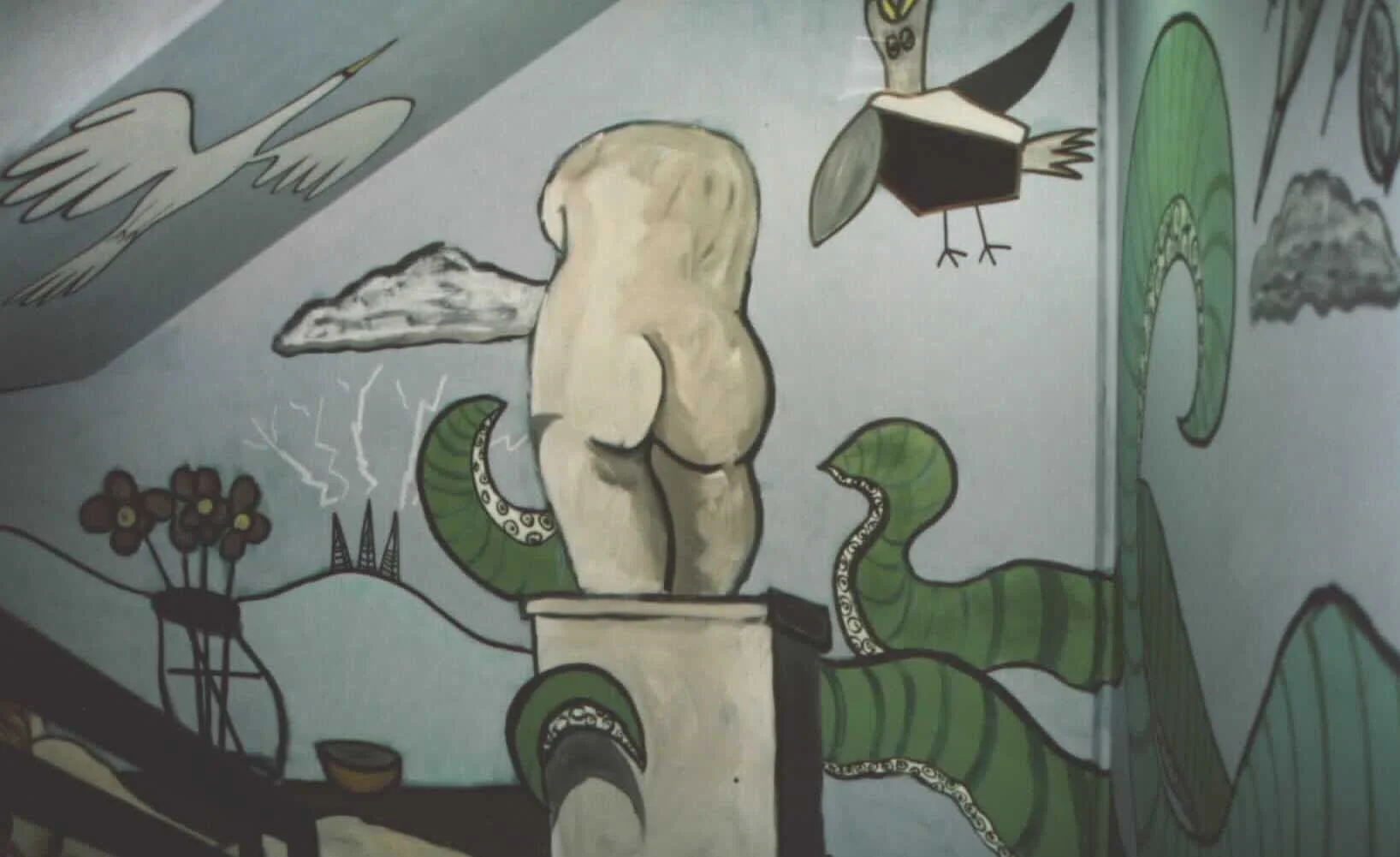
Imax Cinema Stairwells – Collaborative Murals (1998)
Artists: Driller Jet Armstrong & Chris Gaston
Medium: Full multi-level interior murals
Themes:
Stairwell 1: Life on Earth, Hell, Sky, Space
Stairwell 2: Giant Snakes & Ladders game
These two enormous interior murals — spanning multiple levels — form one of the most ambitious collaborative mural projects in 1990s Adelaide. Vivid, theatrical, and bursting with imagery, the stairwells became immersive narrative environments.

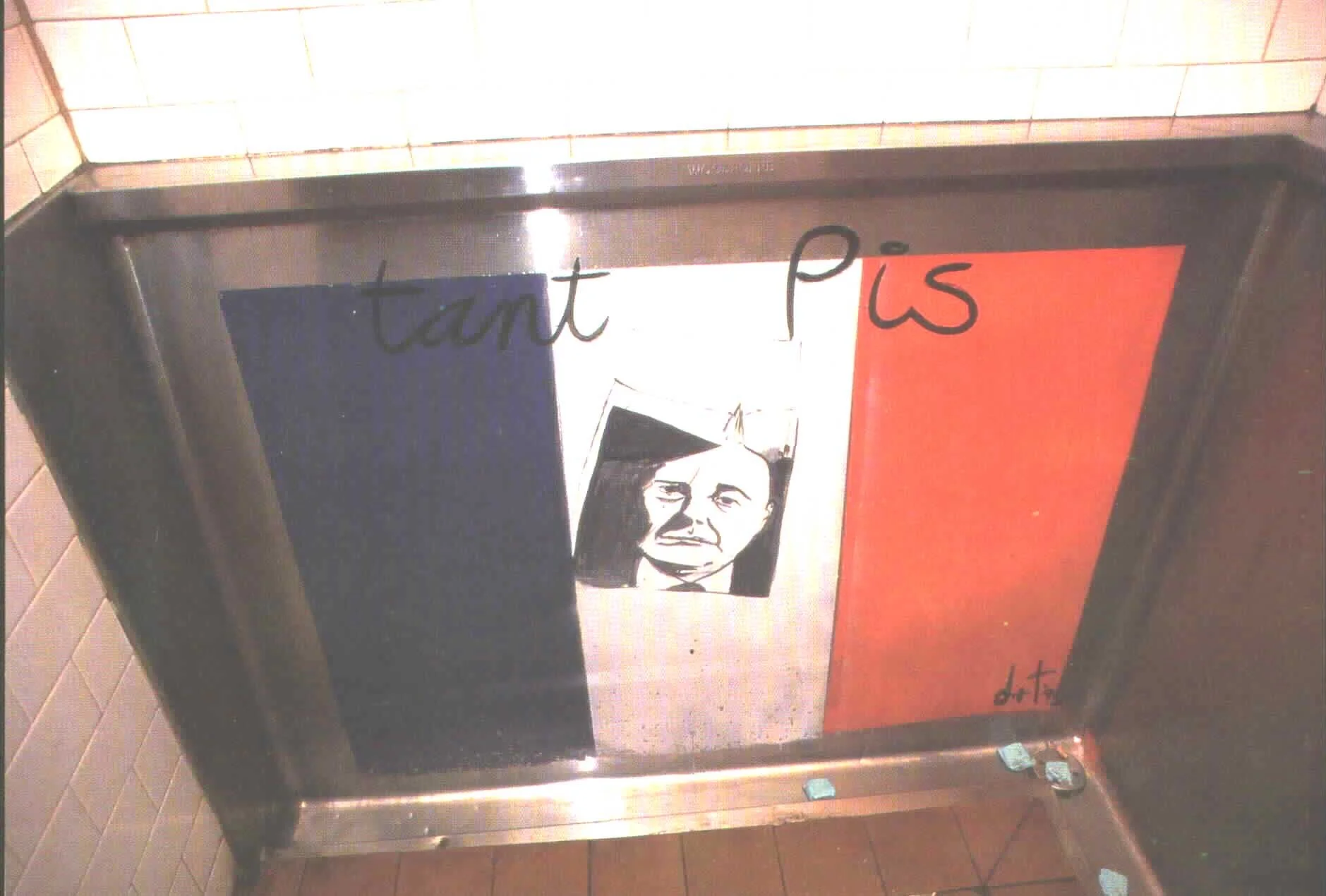
Tant Pis Murinal (1995)
5. Tant Pis Murinal (1995)
Artists: Driller Jet Armstrong & Terry McMullin
Medium: Enamel on stainless steel (urinal installation)
Theme: Anti–French nuclear testing protest
Recognition: Media award for best protest artwork (1995)
A notorious and celebrated protest artwork: the world’s first mural on a urinal. Created in response to France’s Pacific nuclear testing and President Jacques Chirac’s dismissive “Tant pis” (“too bad”), the piece became both politically biting and wickedly humorous. A limited set of postcards was produced and are now collectors’ items.
The Bridgewater Intervention (2022)
A community action, a protest, and an artwork
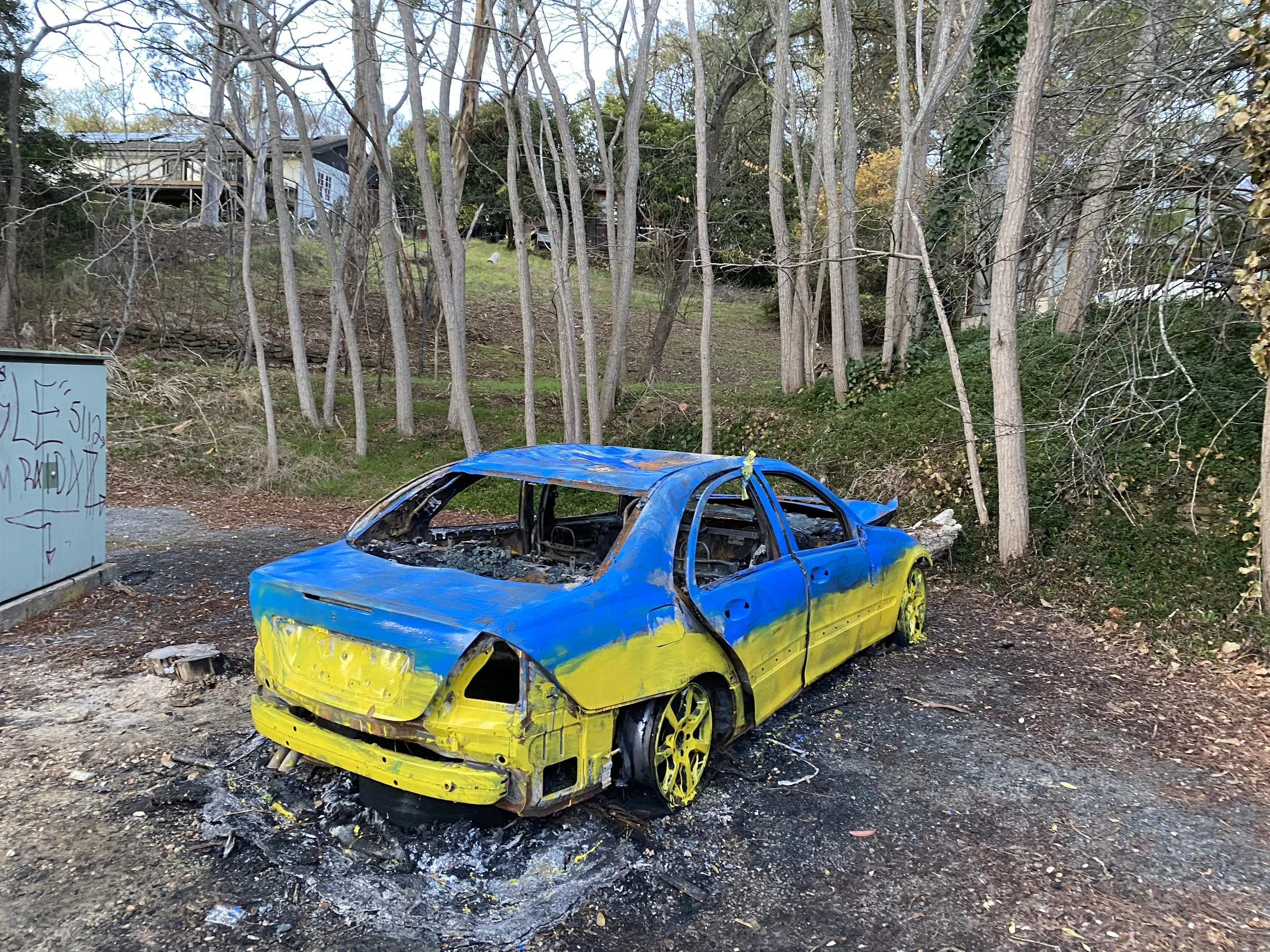
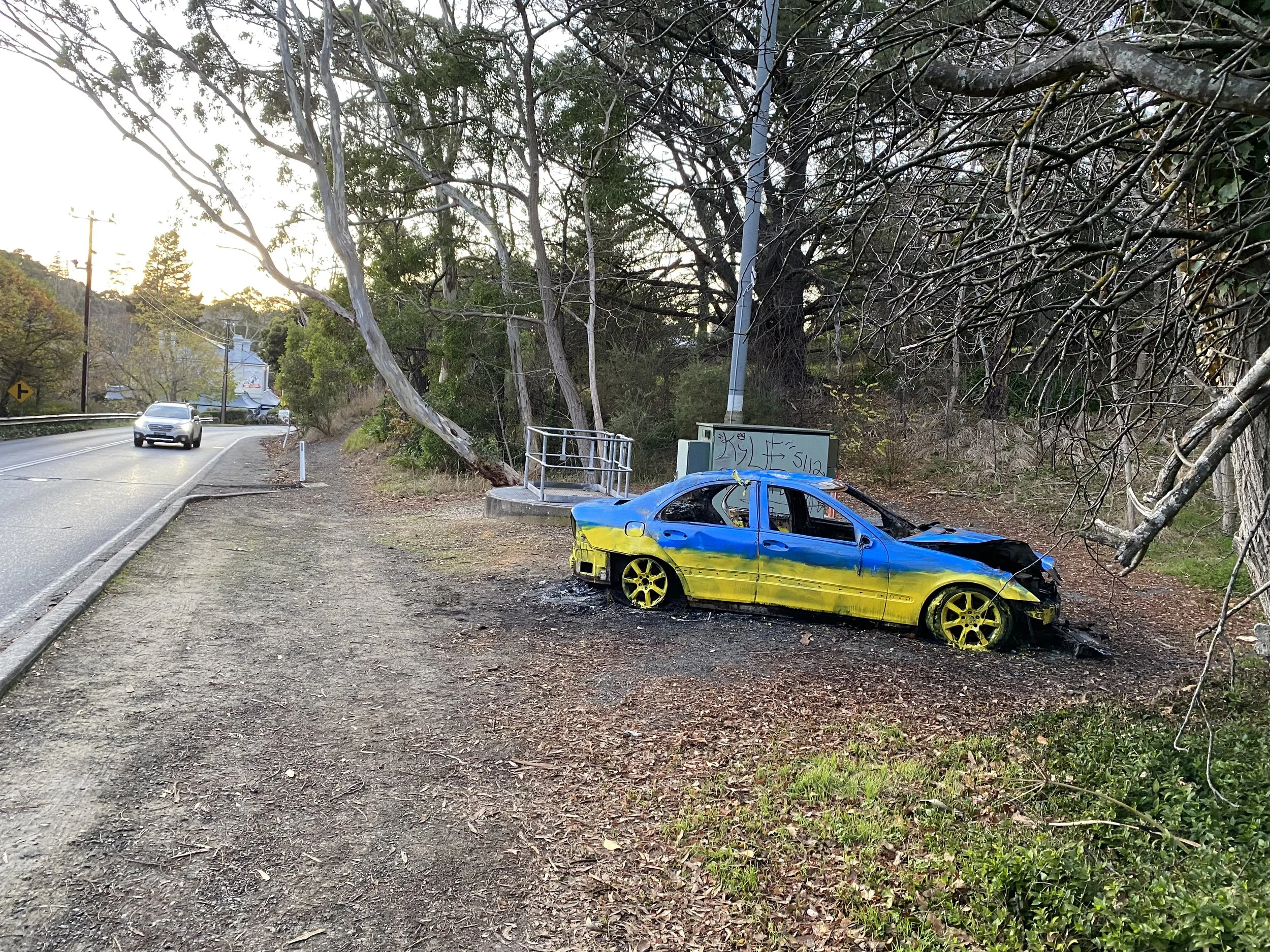
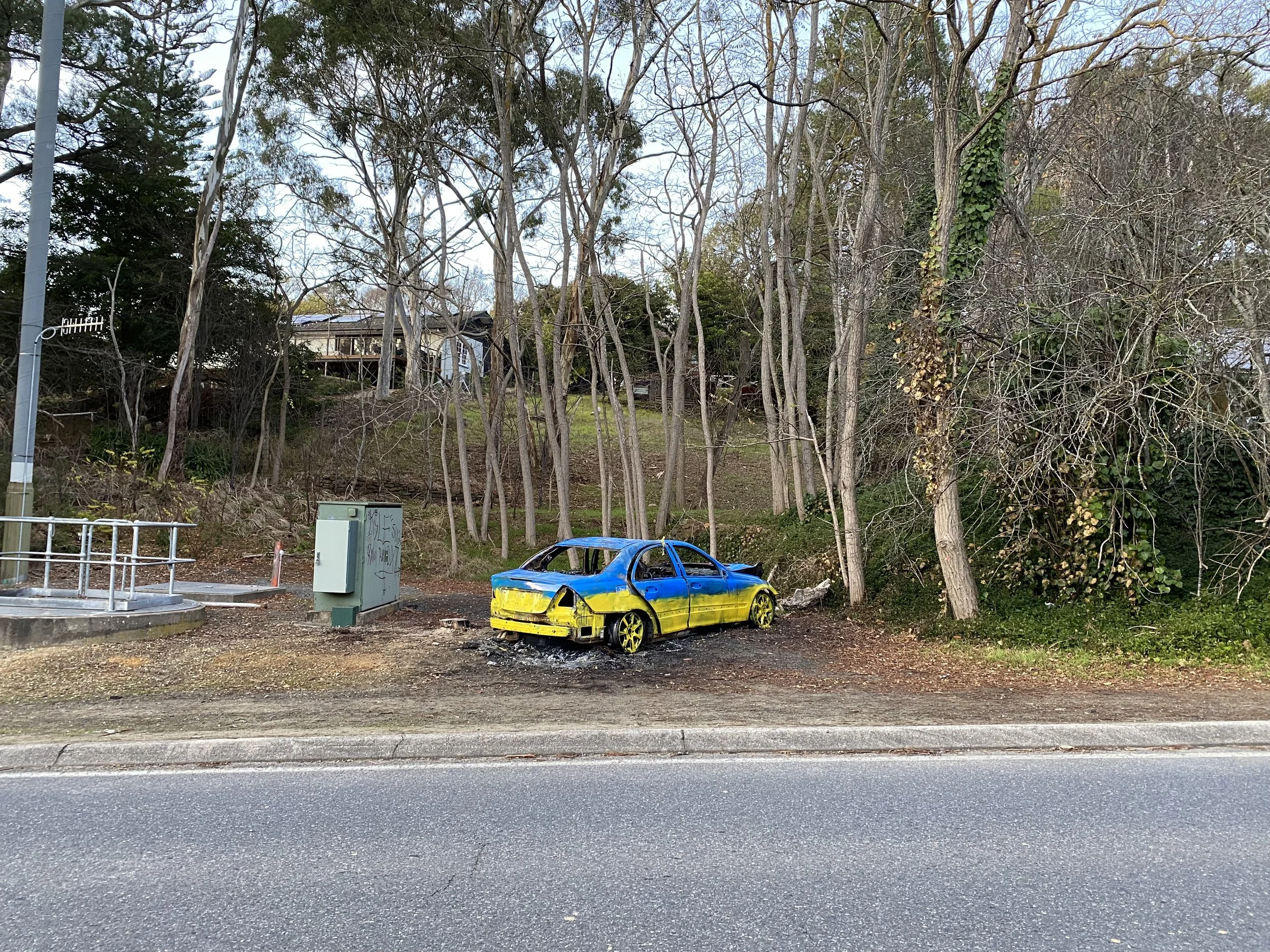
In the weeks leading up to 23 May 2022, a stolen car was dumped and torched at the entrance to Bridgewater in the Adelaide Hills. For locals, this gateway is normally a place of beauty—trees, birds, walking paths, the soft welcome of the hills. Instead, a burnt-out shell sat abandoned while the council and police debated who was responsible for removing it. Days passed. Nothing happened. The wreck became a symbol of neglect, frustration, and bureaucratic stalemate.
Rather than allow it to remain an eyesore, I decided to transform it.
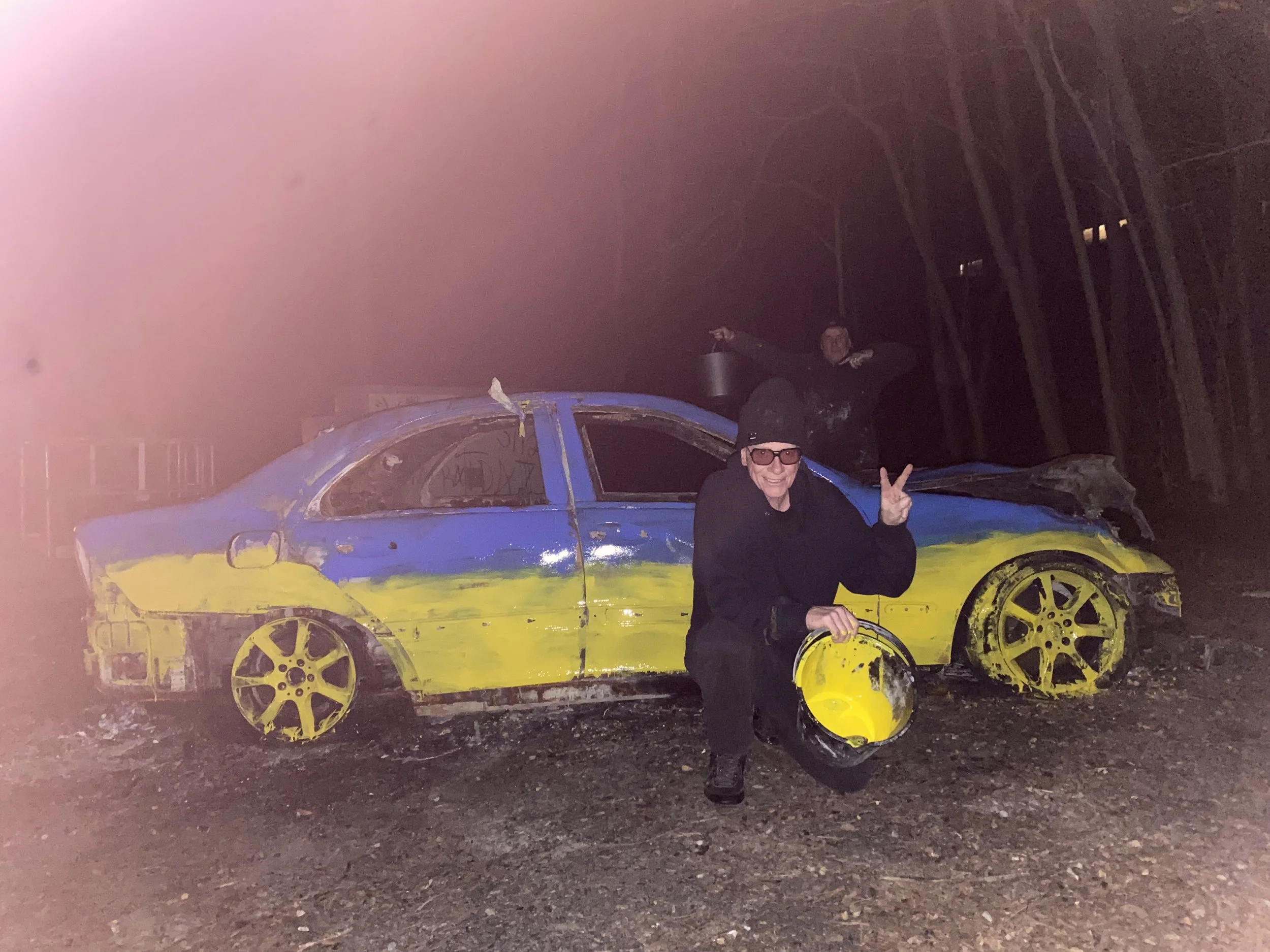
On the night of 23 May, under the cover of darkness, a small crew of friends and neighbours joined me in a spontaneous act of public repair and political expression. We painted the burned-out car in the bold blue and yellow of the Ukrainian flag—a gesture of solidarity with Ukraine during the Russian invasion, and a message of moral support for its citizens.
What had been a symbol of local inaction suddenly became something else entirely: a beacon, a protest, an accidental monument. Bright, absurd, and defiant. A Daubist act in the open air.
The intervention caught public attention. It was picked up by ABC Radio and other media outlets, sparking conversations about civic responsibility, community action, and the power of art to reclaim damaged space.
For a brief moment, the entrance to Bridgewater became a site of colour, resistance, and renewal—proof that even a burned-out car can be transformed into a work of hope when a community refuses to look away.